Finance
Finance
breaking
latest
fresh
March 04, 2026
• The Daily Caller
Trump Vows To Protect Key Energy Chokepoint Strait Of Hormuz As Global Oil Prices Surge
President Donald Trump directed the U.S. International Development Finance Corporation (DFC) to provide insurance to ships in the Gulf after Iran blocked the Strait of Hormuz, leading to increased oil prices.
Trump, in a Tuesday Truth Social post, said the United States could deploy U.S. Navy escorts for commercial oil tankers transiting the strait if needed. His announcement follows a spike in oil prices driven by Iranian closure of the strait and threats against vessels attempting to pass through the critical waterway.
Marine insurers began cancelling war risk coverage for vessels, Reuters reported Sunday, noting that oil shipping rates are expected to increase even more.
“Effective IMMEDIATELY, I have ordered the United States Development Finance Corporation (DFC) to provide, at a very reasonable price, political risk insurance and guarantees for the Financial Security of ALL Maritime Trade, especially Energy, traveling through the Gulf,” Trump said in a Truth Social post.
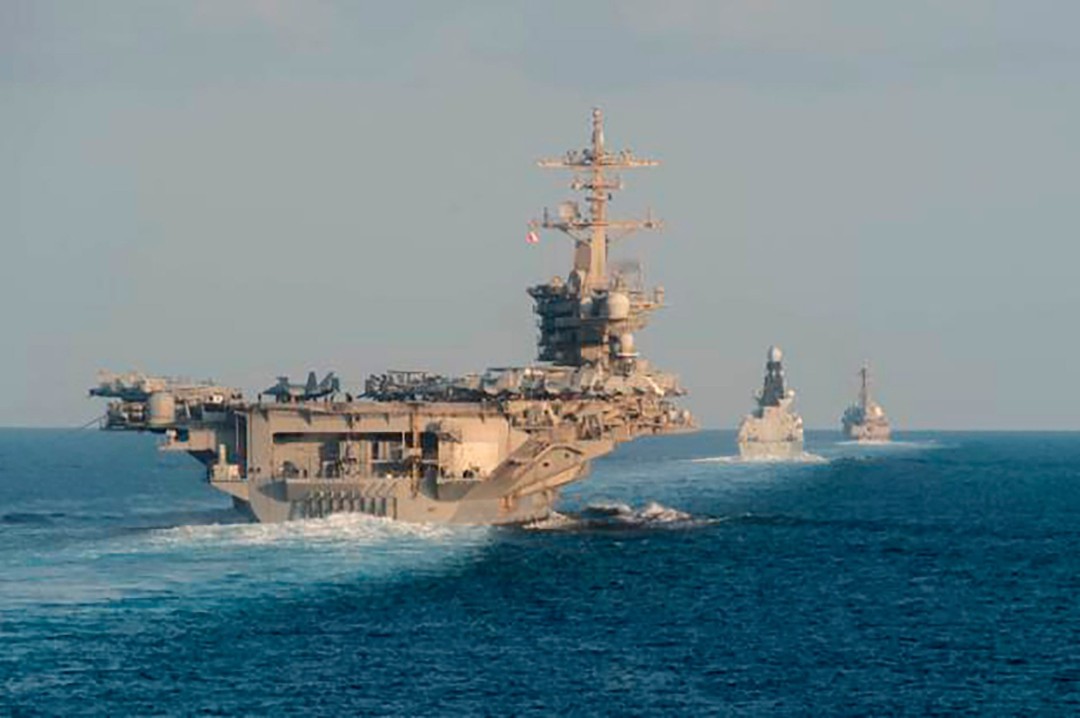
“If necessary, the United States Navy will begin escorting tankers through the Strait of Hormuz, as soon as possible,” Trump added.
Trump directs the United States Development Finance Corporation (DFC) to provide risk insurance and guarantees for the financial security of maritime trade. “If necessary, the United States Navy will begin escorting tankers through the Strait of Hormuz, as soon as possible.” pic.twitter.com/5cUnOQIqda — Mann Vipas (@MannVipas) March 3, 2026
Trump’s warning about U.S. Navy escorts indicates the potential of increased maritime presence in the region to protect commercial shipping, Ynet News reported. This comes as the U.S. Military has increased activity in the region and sunk several Iranian naval vessels.
The Strait of Hormuz is a critical waterway with disruptions causing volatility in the global energy market. (RELATED: Iran War Reportedly Leaves Oil Tankers Stranded Amid Global Shipping Crisis)
The price of oil has increased by more than 15 % since the conflict with Iran started, and oil prices are likely to increase further due to Iran’s closure of the strait and attacks on energy installments, according to Al Jazeera.
Increases in oil prices have started to result in higher gasoline prices, which are expected to rise higher relative to when Trump took office last year, according to Politico.
About one-fifth of the world’s oil and large amounts of liquified natural gas pass through the straight between Iran and Oman, Ynet News reported.
Maritime insurers like Gard, Skuld and NorthStandard have announced their maritime coverage will end starting March 5, according to the Insurance Journal, citing company notices.
“Risks have gone up, so your insurance rates are going to go up. That’s the way the market should work, that’s the inevitable consequence of engaging in these activities,” Wayne Winegarden, a senior fellow at the Pacific Research Institute, told the Daily Caller.
The U.S. is mostly self-sufficient with oil production, but an increase in global oil prices could spike inflation and affect American gas costs, according to Al Jazeera.
“Oil is a globally traded commodity,” Winegarden to the Caller.
“If there are shorter supplies, we’re going to see upward pressure on prices. Oil and gasoline are still ubiquitous throughout the economy, so you’re going to see major price increases, and that’s going to not only worsen affordability issues that families are struggling with, especially here in California, but it’s going to weaken the economy,” he continued.
“So what we’re then going to have is higher prices and less income growth or higher job losses,” he told the Caller.